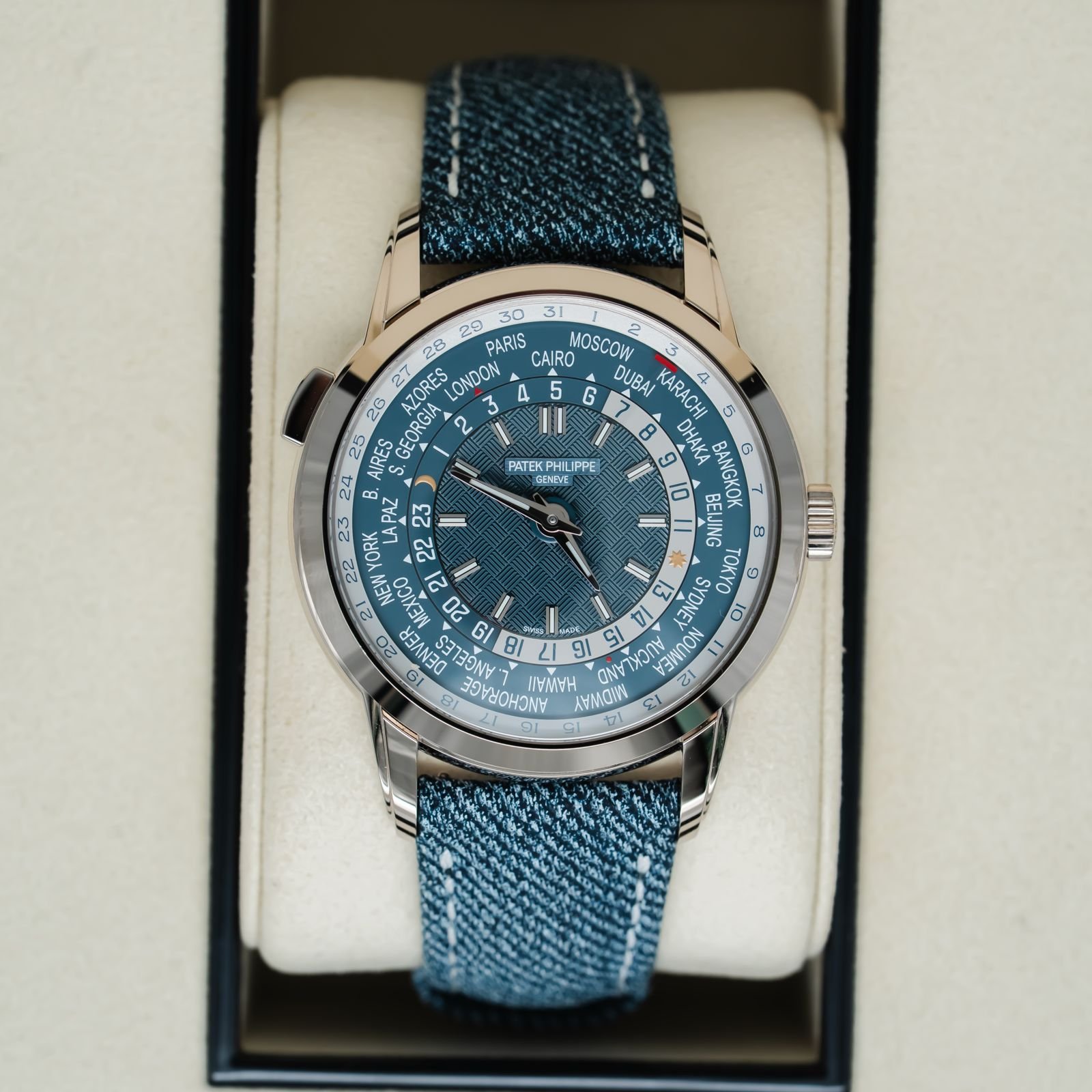
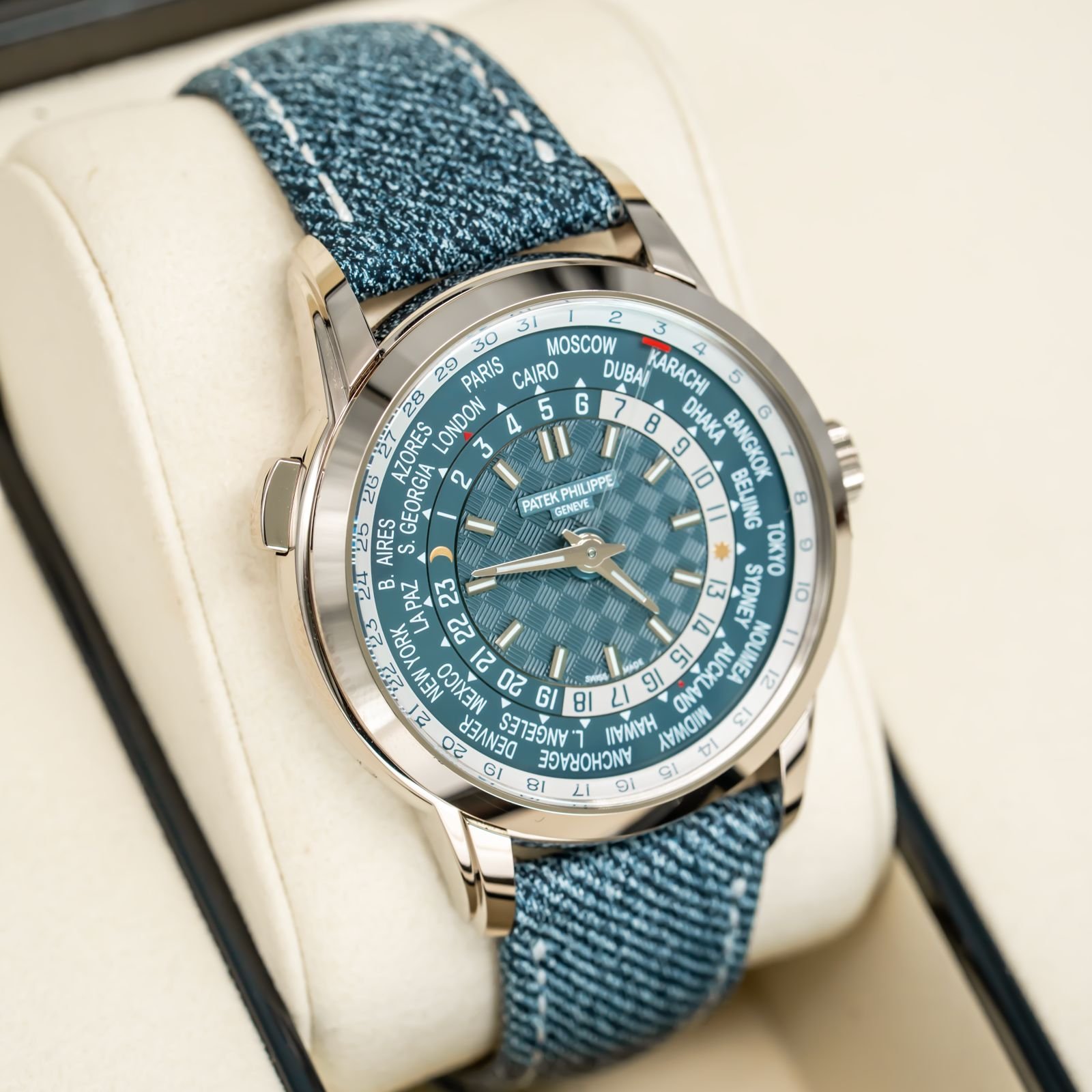
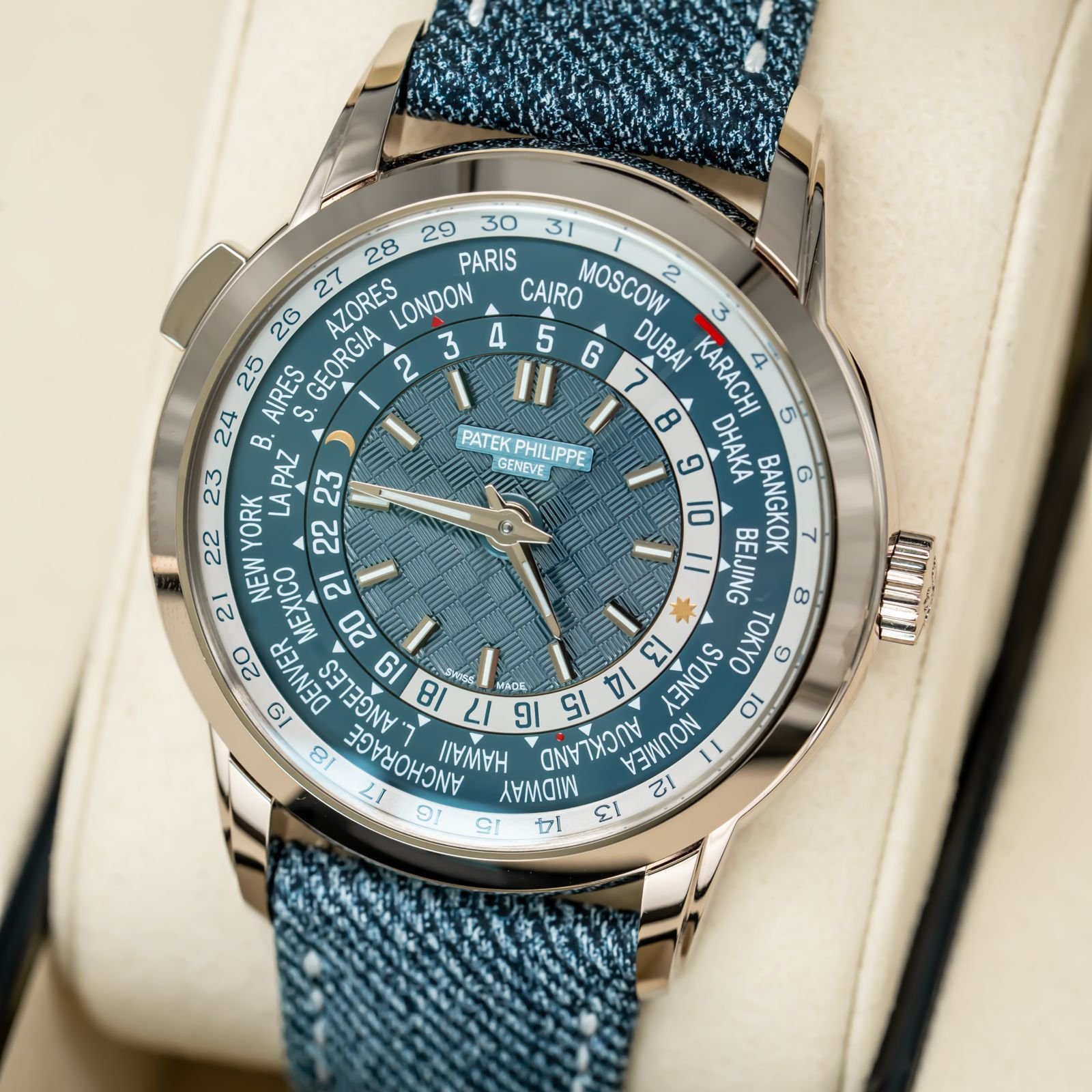
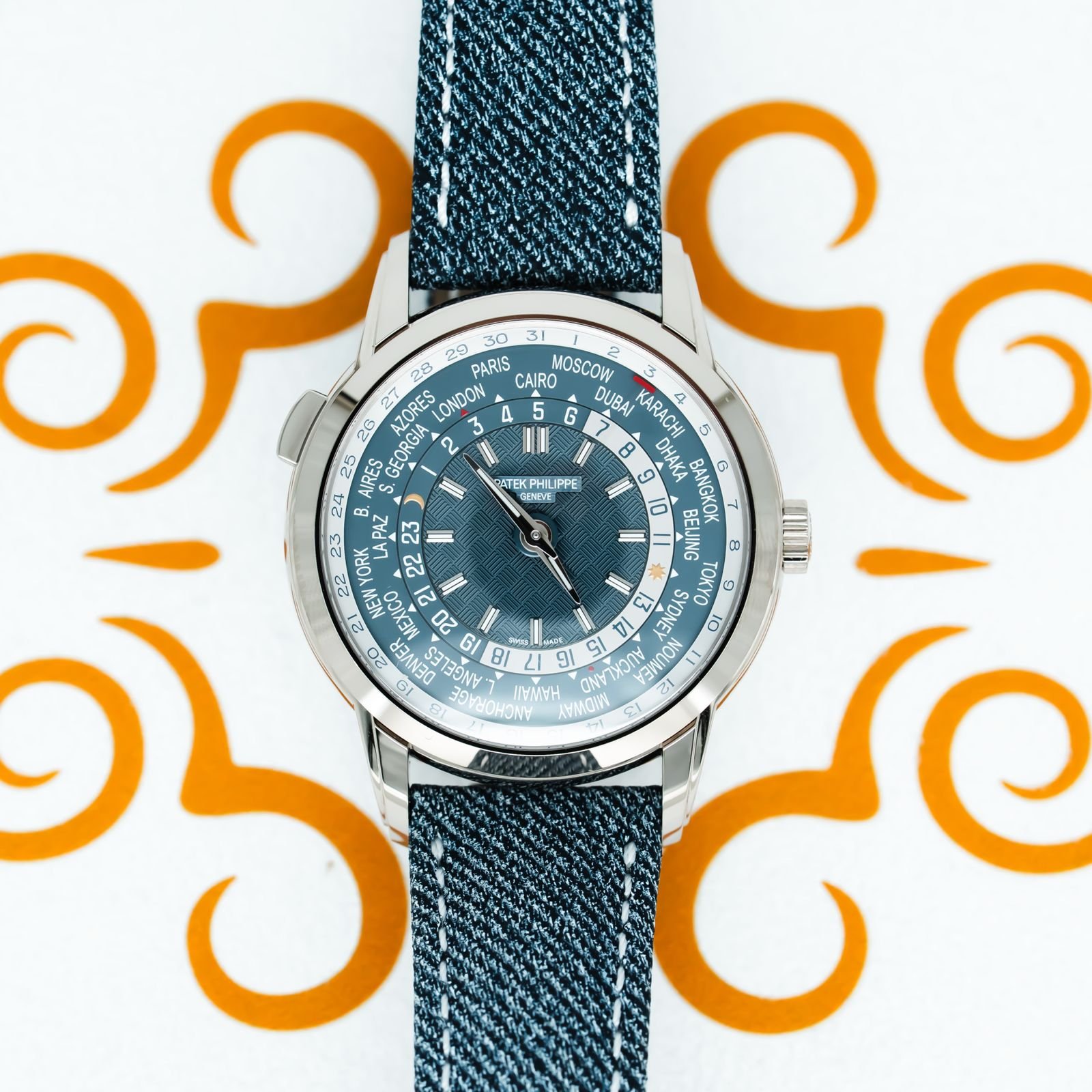
If you have been searching for information on the Patek Philippe World Time Date in blue, chances are you already know this is not just another luxury watch. This is reference 5330G 001, one of the most talked about releases to come out of Geneva in recent years, and it represents something Patek Philippe had never done before in nearly ninety years of making World Time watches. In this guide we will walk through where this watch came from, what makes it technically special, why it is so difficult to get your hands on one, and what it actually costs to own today.
The Story Behind the Patek Philippe World Time
To understand why the 5330G matters, you have to go back to the 1930s. The World Time complication as we know it today was developed by Louis Cottier, a watchmaker from Geneva who solved a very real problem for travellers of that era. Before his invention, reading the time in a different city meant doing mental math. Cottier’s solution was elegant. He created a rotating city disc paired with a 24 hour ring, so a person could glance at a dial and instantly read the time anywhere in the world.
Patek Philippe was the first major manufacture to adopt this idea commercially, launching the reference 1415 in 1939. That watch, produced until 1954, is now one of the most sought after vintage Patek pieces in existence. Over the following decades Patek refined the World Time line through references like the 1416, 2523, 5110, 5130 and eventually the modern classic 5230, which most collectors think of when they picture a contemporary Patek World Time.
For all that evolution, one thing never changed. None of these watches had a date function. It sounds like a small omission, but adding a date to a World Time watch is mechanically tricky, since the date has to make sense relative to whichever city is currently selected at 12 o’clock, not just the home time zone. Patek finally cracked this puzzle and first showed the solution as a limited edition of 300 pieces in a striking purple dial, released at the Watch Art Grand Exhibition in Tokyo in 2023. That watch was a preview. In 2024, at Watches and Wonders Geneva, the idea moved into full production as reference 5330G 001, the watch shown in these photos.